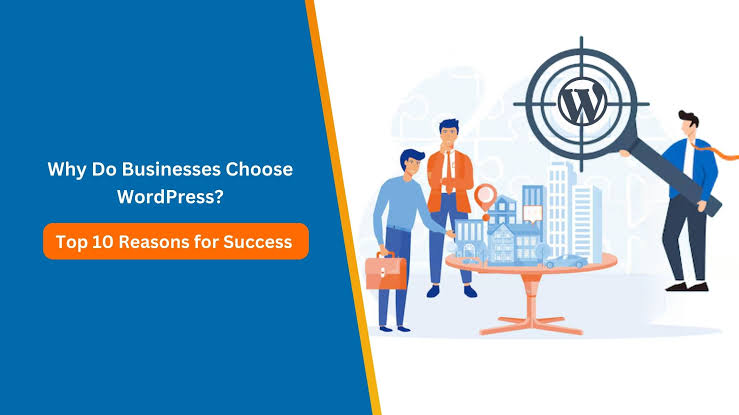
When a business owner asks us why we recommend WordPress over the dozens of other platforms out there, it's rarely one single reason — it's a combination of practical advantages that add up over the life of a website. We've built sites on nearly every platform available, and we still land on WordPress for the majority of Australian small business clients. Here's the real reasoning, not the marketing version.
They want to own their website, not rent it
This is the reason that matters most once business owners understand it. With WordPress, your content, design and code belong to you outright, sitting in a database and files you control. Stop paying your host, and you can simply move to another one — nothing disappears.
Subscription website builders work differently: stop paying, and your site, your content and your SEO rankings vanish along with it. A Toowoomba accounting firm that's spent three years building organic traffic doesn't want that traffic tied to a monthly subscription they can never stop paying. We've written more on this trade-off in why cheap websites cost more.
It grows with the business instead of being outgrown
A lot of businesses start with modest website needs and end up wanting much more a few years later — a blog, an online store, a booking system, a members area. WordPress handles that evolution without forcing a platform change.
- A simple brochure site can add WooCommerce for online sales later.
- A basic contact form can evolve into detailed quote request or booking workflows.
- A handful of service pages can grow into a full content marketing engine.
Businesses on more limited platforms often hit a wall and face a full rebuild elsewhere just to add functionality WordPress would have handled natively.
The plugin ecosystem solves problems fast and affordably
Nearly any functional requirement — a booking calendar, a members area, advanced forms, multilingual content — already has a mature, well-supported WordPress plugin behind it. That means faster delivery and lower cost than custom-building the same feature from scratch, which is often the only option on more closed platforms.
Our guide to the best WordPress plugins for business runs through which ones are genuinely worth using, since the trick is choosing well rather than installing everything on offer.
It gives them real control over SEO
Businesses that take organic search seriously need full control over titles, meta descriptions, URL structure, heading hierarchy and page speed. WordPress hands you every one of those levers directly, especially paired with a proper SEO plugin.
A Cairns tour operator competing for tourism-related searches can't afford a platform that restricts URL structure or limits how content is organised — WordPress's openness is a genuine competitive advantage there. Our WordPress SEO checklist covers exactly what to put in place.
There's no shortage of people who can help
Because WordPress runs such a large share of the web, the pool of developers, designers and agencies who understand it is enormous and genuinely competitive. If a business is unhappy with their current developer, finding a replacement who can pick up an existing WordPress site is realistic.
Platforms tied to a single company, or built on a proprietary in-house system, leave a business dependent on whoever built it originally — a real risk if that developer disappears or a relationship sours.
It scales down as easily as it scales up
WordPress isn't just for large, complex sites — a sole trader can run an efficient, fast, professional website without paying for capability they'll never use. That flexibility in either direction is rare; many platforms are either too simple for a growing business or too heavyweight and expensive for a small one.
Security and reliability, done properly
WordPress's popularity means it's a common attack target, which is the fair criticism levelled at it — but a well-maintained WordPress site, on decent hosting, with sensible security practices, is a genuinely safe place to run a business. The issues we see almost always come down to neglect rather than a flaw in the platform itself.
Our WordPress security best practices guide and a routine like our WordPress maintenance checklist turn this from a worry into a manageable habit.
Why businesses choose WordPress at a glance
| Reason | What it means for the business |
|---|---|
| Ownership | Full control of content, code and data — no rented platform |
| Growth-ready | Add eCommerce, bookings, membership areas without switching platforms |
| Plugin ecosystem | Solve most requirements affordably, without custom development |
| SEO control | Full control over titles, structure, speed and technical SEO |
| Talent pool | Large, competitive market of developers and agencies |
| Scalability | Works for a sole trader and a large multi-location business alike |
| Security | Manageable and safe with proper maintenance in place |
Key Takeaways
- Ownership of content and code is the single biggest reason businesses stick with WordPress long-term.
- WordPress grows with a business rather than forcing a platform change as needs evolve.
- The plugin ecosystem delivers most functionality affordably, without custom builds.
- A large, competitive talent pool means businesses aren't locked into one developer.
- Security concerns are manageable with proper maintenance — the platform itself isn't the risk.
Frequently Asked Questions
Why do businesses prefer WordPress over website builders like Wix?
Mainly ownership and flexibility. Website builders are a rented platform — stop paying and your site disappears — while WordPress content and code belong to the business outright. WordPress also offers far more room to grow into eCommerce, complex content or custom functionality without hitting a platform ceiling.
Is WordPress only good for blogs?
No. While WordPress started as blogging software, it's long since grown into a full platform capable of running eCommerce stores, booking systems, membership sites and complex business websites of any type, powering a huge share of the web well beyond blogging.
Is WordPress cost-effective for small businesses?
Yes, generally. There's no mandatory platform subscription — costs come from hosting, a theme and any plugins you choose — and the enormous plugin ecosystem often solves functional requirements far more cheaply than custom development would on a closed platform.
Do I need technical skills to run a WordPress website?
Basic day-to-day tasks — editing pages, adding blog posts, updating images — are manageable for most business owners after a short learning period. More technical changes are typically handled by a developer, similar to most other platforms.
Is WordPress a good choice for an online store?
Yes, through WooCommerce, which is one of the most widely used eCommerce platforms globally and integrates with the rest of the WordPress ecosystem. See our comparison of WooCommerce vs Shopify if you're weighing it against a hosted alternative.
Why do agencies recommend WordPress so often?
Largely because of its flexibility, ownership model and the depth of its ecosystem — agencies can build almost any requirement on WordPress without fighting platform restrictions, and clients end up owning a genuine asset rather than a rented one.
Is WordPress secure enough for a business handling customer data?
Yes, when properly maintained — kept updated, backed up, hosted well and secured with sensible practices like strong passwords and two-factor authentication. Most security incidents stem from neglect rather than an inherent flaw in WordPress itself.
Will WordPress become outdated or unsupported?
It's very unlikely. WordPress is open-source, meaning no single company controls its future, and its enormous existing user base gives developers, hosting providers and plugin makers strong ongoing incentive to keep supporting and improving it.
Get a WordPress site built the right way
The reasons businesses choose WordPress all come down to the same underlying idea — building an asset you actually own and control, not renting someone else's platform. If you'd like a WordPress website built properly for your business, have a chat with Pixel and Pine.