"Is a website even worth it?" is a fair question when you're staring down a quote from an agency. The honest answer is that a website's return on investment isn't mysterious — it comes down to how many of the right visitors arrive, and how many of them turn into paying customers. Once you understand those two levers, working out your website ROI becomes a lot less abstract and a lot more useful.
What website ROI actually means
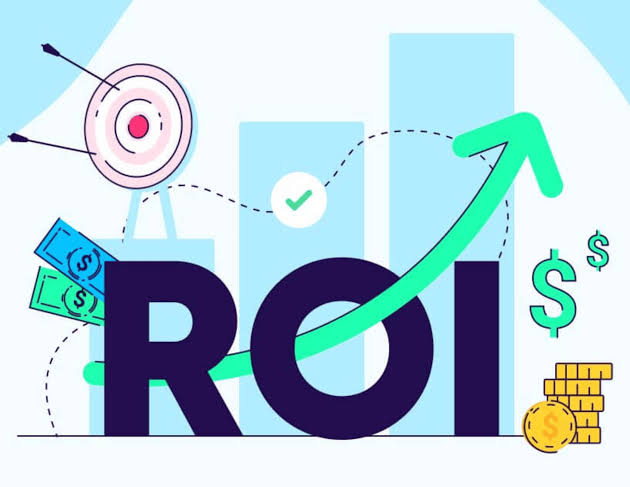
Return on investment, in plain terms, is what you get back compared to what you spent. For a website, "what you spent" includes the build cost plus ongoing hosting, maintenance and any marketing that drives traffic to it. "What you get back" is the value of the enquiries, bookings or sales that the site generates, directly or indirectly.
The mistake many business owners make is judging a website purely on how it looks, or comparing quotes purely on price. Neither tells you anything about ROI. A cheaper site that generates no enquiries has an infinite cost per customer; a pricier site that reliably turns visitors into paying clients can pay for itself many times over.
The two levers that drive website ROI
Every website's return comes down to two things multiplied together:
- Traffic — how many people find and visit the site.
- Conversion rate — what share of those visitors take a meaningful action (call, enquiry, booking, purchase).
A site with plenty of traffic but poor conversion wastes the marketing spend used to attract those visitors. A site with excellent conversion but almost no traffic has nobody to convert. Improving ROI means working on whichever lever is weaker — and for most small businesses, that's conversion, because it's cheaper to fix than buying more traffic.
Why conversion is usually the fastest win
Businesses often reach for more advertising spend when sales feel slow, assuming they simply need more eyes on the site. But if the site itself is slow, confusing, or missing a clear call to action, more traffic just means more people leaving unconverted — and a higher advertising bill for the same result.
A Toowoomba landscaping business that fixes a confusing quote form, for example, can lift its enquiry rate without spending an extra dollar on ads. That's a direct, measurable improvement to ROI, and it's usually one of the cheapest changes you can make. This is covered in more depth in how a better website increases sales.
What to measure
You don't need complicated analytics to understand your website's return. Track a handful of numbers consistently and you'll see the story clearly over time:
- Enquiries or leads generated — phone calls, form submissions, booking requests, emails.
- Conversion rate — the percentage of visitors who take one of those actions.
- Cost per enquiry — total spend (build, maintenance, marketing) divided by the number of enquiries in a period.
- Customer value — what a typical converted enquiry is actually worth to your business, so you can compare it fairly against the cost.
Comparing investment approaches
Not all website spending produces the same return. It helps to think in terms of what you're actually paying for, not just the price tag.
| Approach | Typical upfront cost | Effect on ROI over time |
|---|---|---|
| Cheapest possible DIY build | Very low | Often poor — weak conversion, more rework later, hidden cost in lost enquiries |
| Mid-range template site, professionally set up | Moderate | Reasonable if built with conversion in mind, limited if generic |
| Custom-planned site with clear strategy | Higher | Strongest long-term return if paired with good content and maintenance |
| Any site left unmaintained after launch | Compounding cost | Declines over time as speed, security and relevance drop |
The pattern to notice: the cheapest option upfront isn't automatically the best ROI, and the priciest isn't automatically the best either. What matters is whether the site is built and maintained with your actual customers and goals in mind — a point explored further in why cheap websites cost more.
Maintenance protects the return you've already earned
A website that performed well at launch can quietly lose ground over the following year — broken plugins, slow load times, outdated content, security issues. Each of those erodes conversion rate even if traffic stays steady, which means your ROI silently declines without anyone noticing until enquiries drop off. Ongoing care is what protects the return on the original investment, which is exactly why why website maintenance matters is worth treating as part of the ROI conversation, not a separate expense.
How marketing spend changes the ROI equation
If you're running Google Ads or investing in SEO, your website becomes the multiplier on that spend. A landing page that converts twice as well effectively halves your cost per customer from the same advertising budget. This is why it rarely makes sense to pour money into traffic before checking the site itself is ready — see seo vs Google Ads for how the two channels fit together, and get the site right first.
Key Takeaways
- Website ROI comes down to traffic multiplied by conversion rate — both matter, but conversion is usually cheaper to improve.
- Track enquiries, conversion rate and cost per enquiry consistently rather than judging a site on looks alone.
- The cheapest build isn't automatically the best return — unmaintained or poorly planned sites cost more over time.
- Ongoing maintenance protects the ROI you've already paid for.
Frequently Asked Questions
How do I calculate my website's ROI?
Add up what the site costs you over a period — build cost divided across its lifespan, plus hosting, maintenance and any marketing spend — then compare that to the value of the enquiries or sales it generated in the same period. Even a rough estimate is more useful than judging the site on appearance alone.
What's a reasonable return to expect from a business website?
It varies by industry and how competitive your market is, so there's no universal figure. The more useful question is whether your website's enquiry numbers are trending up, flat or down over time, and whether cost per enquiry is improving as you make changes.
Does a redesign automatically improve ROI?
Not automatically — it depends on what's being redesigned and why. A redesign focused on clarity, speed and calls to action tends to lift conversion. A redesign that's purely cosmetic, without addressing usability or content, often makes little difference to the numbers.
Is SEO or paid advertising better for website ROI?
They serve different purposes and often work best together. Paid advertising can bring traffic quickly but stops the moment you stop paying; SEO builds more slowly but keeps working in the background. Either way, the return depends heavily on how well your site converts the traffic it receives.
How long does it take to see a return on a new website?
Some improvements, like a clearer call to action, can lift enquiries within days. Broader gains from search visibility and reputation typically build over several months. Ongoing maintenance and content updates keep that return compounding rather than fading.
Can a small business afford to measure ROI properly?
Yes — you don't need enterprise tools. Basic analytics paired with simply counting enquiries and asking new customers how they found you will tell you most of what you need to know.
Why does my website get traffic but very few enquiries?
That's usually a conversion problem rather than a traffic problem — unclear messaging, a missing or buried call to action, slow load times, or a lack of trust signals. This is explored in detail in why your website isn't generating leads.
Should I judge website ROI on the same timeline as other marketing spend?
Not quite — a website is closer to an asset than a one-off campaign. Its return builds over its whole lifespan, and neglecting it (rather than maintaining and improving it) is what causes ROI to decline, unlike a campaign that simply ends.
Get a website that pays for itself
Understanding your website's ROI is the first step to improving it — and most businesses find there's real, low-cost opportunity sitting in plain sight. If you'd like a clear-eyed look at what your site is actually returning and where the opportunity is, have a chat with Pixel and Pine.