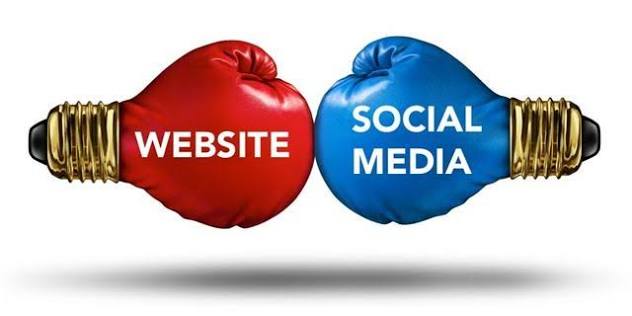
"Do I even need a website if I've got a solid Instagram following?" is a question more Australian small business owners are asking, and it's a fair one. Social media feels immediate, free to start, and easy to update. But treating it as a replacement for a website, rather than a companion to one, is a decision that quietly limits how much control you have over your own business.
The core difference: ownership
The single biggest difference between a website and a social media profile is who's actually in control. Your website belongs to you — you decide what stays, what changes, and nobody else can shut it down, change the rules, or bury your posts behind an algorithm. Your social media presence, no matter how large the following, is built on land you're renting. Platforms change their algorithms, their features and their terms whenever they choose, and a page or account can be restricted or removed without much warning.
A Bunbury café with ten thousand Instagram followers has built real value — but it's value sitting on someone else's platform, subject to someone else's rules. A website is the one piece of your online presence that's genuinely, permanently yours.
What social media does well
Social media has real strengths, and dismissing it would be as short-sighted as relying on it alone:
- Discovery and reach — it's genuinely good at putting your business in front of people who weren't looking for you yet.
- Community and engagement — comments, shares and direct messages build relationships in a way a static website page can't.
- Low barrier to start — no build cost, and posting is quick once you've got a rhythm.
- Showing personality — behind-the-scenes content and casual posts humanise a business in a way a formal website page often doesn't.
What only a website does
A website does jobs that social media simply isn't built for:
- Converts serious buyers. Someone ready to book, buy or enquire wants clear information and an easy way to act — not a scroll through a feed.
- Builds long-term trust. A professional, well-structured site signals credibility in a way a social profile alone doesn't, particularly for considered purchases like trades, legal or medical services.
- Owns your search visibility. People searching Google for your service in your area need somewhere to land — your website is what shows up, not your Instagram feed.
- Works when you're not posting. A website keeps doing its job at 2am or during a busy week when you haven't had time to post; a social feed goes quiet the moment you stop showing up.
- Isn't at the mercy of an algorithm. Every visitor who reaches your website sees it in full — no algorithm decides whether they get shown your content first.
Side-by-side comparison
| Factor | Website | Social Media |
|---|---|---|
| Ownership | Fully yours | Rented from the platform |
| Control over changes | Complete | Subject to platform rules and updates |
| Search visibility (Google) | Strong, direct | Limited, indirect at best |
| Best for | Converting ready buyers, building trust | Discovery, engagement, personality |
| Longevity of content | Permanent until you change it | Buried by new posts within days |
| Cost structure | Upfront build, then ongoing maintenance | Free to post, but time-intensive; paid ads extra |
| Works while you're not active | Yes | No — visibility drops without frequent posting |
| Risk of losing access | Very low | Real — accounts can be restricted or removed |
Why the smartest approach uses both, deliberately
The businesses that get the most out of their marketing don't choose one over the other — they use each for what it does best. Social media builds awareness and relationships; the website converts that awareness into actual enquiries and sales, and keeps working for you long after a post has scrolled out of sight.
A practical, common pattern looks like this: a Toowoomba landscaping business posts before-and-after project photos on Instagram to build interest and personality, then every post links back to a website page with real detail, pricing guidance, and a clear way to book a quote. The social post starts the relationship; the website closes it.
What happens if you only have social media
Relying solely on social media leaves real gaps. Customers searching Google for your service in your area may never see you if you don't have a website to show up in those results. New customers unfamiliar with your business often want a proper look at your services and credibility before committing — something a feed of posts doesn't easily provide. And if a platform changes its algorithm or restricts your account, your entire online presence can disappear overnight. This risk alone is a strong argument covered further in why your business needs a professional website.
What happens if you only have a website
A website with no social media presence and no other marketing behind it can sit quietly, waiting for visitors who never arrive. A site alone doesn't create discovery — it needs traffic from somewhere, whether that's search, social media, word of mouth or paid advertising. This is why a broader marketing approach matters more than any single channel; the small business digital marketing guide covers how the pieces fit together.
Key Takeaways
- A website is owned outright; social media is rented space subject to someone else's rules.
- Social media excels at discovery, engagement and personality; a website excels at conversion, trust and search visibility.
- Losing access to a social platform can mean losing your entire online presence overnight — a website doesn't carry that risk.
- The strongest approach uses both together, with social media driving traffic toward a website built to convert it.
Frequently Asked Questions
Can I run my business with only a social media page and no website?
You can, but it leaves real gaps — you won't show up in Google searches from people who don't already follow you, and you're entirely dependent on a platform you don't control. Most businesses find a proper website noticeably improves trust and enquiry numbers compared to social media alone.
Is a website worth it if I already have a strong social media following?
Yes. A strong following is valuable, but it's built on land you don't own. A website converts that following into direct enquiries, gives you search visibility your social profile can't, and protects your online presence if anything changes with the platform.
Which is cheaper — a website or social media marketing?
Social media is cheaper to start, since posting itself is free, but it demands ongoing time and often paid boosting to maintain reach. A website has an upfront cost but then works continuously with lower ongoing effort, particularly once it's set up properly.
Does social media help my Google search rankings?
Only indirectly. Search engines don't generally rank social media posts the way they rank website pages, so a strong social following doesn't translate directly into search visibility. Your website is what needs to be optimised for that.
Should I link my social media accounts to my website?
Definitely. Linking both ways lets each channel support the other — social media drives interested visitors to your website to convert, and your website gives social visitors a way to explore more and build trust before they buy.
What's the biggest risk of relying only on social media?
Losing access. Accounts can be restricted, hacked or removed by the platform with little warning, and your entire audience and content history can disappear with it. A website carries no equivalent risk since you control the hosting and domain.
How do I decide which to invest more in first?
If you don't yet have a professional website, that's usually the priority, since it's the piece you own and control, and it's what converts serious enquiries. Once that's solid, investing time in social media to drive traffic toward it makes the whole system work harder.
Can social media replace a website for a service-based business?
Generally not well. Service businesses — trades, clinics, professional services — rely heavily on trust and clear information before a customer commits, which a properly built website communicates far more effectively than a social feed alone.
Get the foundation right, then build from there
Social media and a good website aren't in competition — they work best together, with your website doing the heavy lifting of turning interest into real enquiries. If you'd like help getting that foundation right, have a chat with Pixel and Pine.