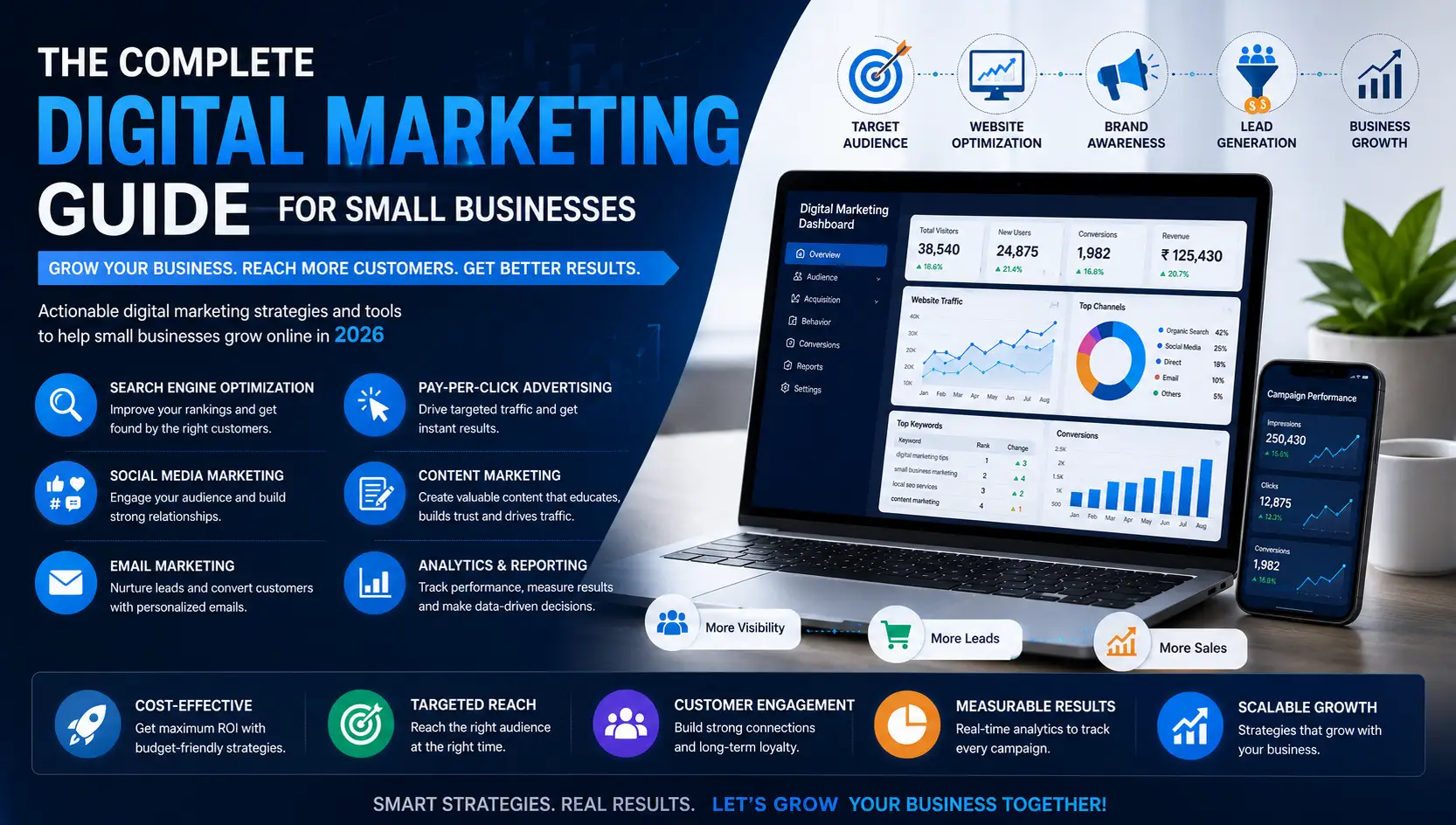
Digital marketing advice for small business owners tends to arrive as a pile of disconnected tips — post more on social media, try Google Ads, fix your SEO, start an email list — without ever explaining how these pieces fit together or which to tackle first. This guide puts it in order: what actually matters for a business with limited time and budget, and how each channel supports the others.
Start with the foundation: your website
Every other marketing channel you invest in ultimately sends people somewhere, and that somewhere is almost always your website. Spending on Google Ads or growing a social following before your website can actually convert visitors into enquiries is like advertising a shop with no working till — you'll get the foot traffic and lose the sale anyway.
Before investing heavily elsewhere, your website needs to:
- Load quickly, especially on mobile.
- Clearly explain what you do and who you do it for.
- Make it obvious how to contact or book with you.
- Show genuine trust signals — real photos, testimonials, credentials.
If any of these are shaky, fix them first. Why your business needs a professional website covers why this foundation matters more than most owners expect, and how to generate leads from your website walks through the specific changes that lift conversion.
Understand the two main traffic channels: SEO and paid ads
Once your website is ready to convert, the next question is how people find it. The two main levers are search engine optimisation (SEO) and paid advertising, most commonly Google Ads. They work differently and suit different situations.
SEO is the practice of improving your website so it ranks well in organic (unpaid) Google search results for the terms your customers actually search. It takes longer to show results — often months — but keeps working without ongoing spend once it's established.
Google Ads puts your business at the top of search results immediately, for a price per click. It's fast to start and easy to switch off, but the traffic stops the moment you stop paying.
Most small businesses benefit from a mix of both rather than choosing one exclusively — SEO for durable, compounding visibility, and ads for immediate results or seasonal pushes. SEO vs Google Ads breaks down exactly when each makes more sense for your situation and budget.
Getting SEO basics right
You don't need to become an SEO expert to make meaningful progress. Focus on:
- Clear page titles and headings that use the terms your customers actually search.
- Genuinely useful content that answers real questions your customers ask.
- Fast load times, since speed affects both rankings and conversion.
- A properly claimed and completed Google Business Profile, particularly for local searches.
- Consistent business details (name, address, phone) across your website and any directories you're listed in.
Getting the most from Google Ads
If you decide to run paid ads, don't skip the groundwork. Make sure your website — and specifically the page each ad points to — is ready to convert the traffic you're paying for. A website checklist before running Google Ads covers the specific things worth checking first, since a great ad pointing at an unready page is money wasted.
Social media: build relationships, don't rely on it alone
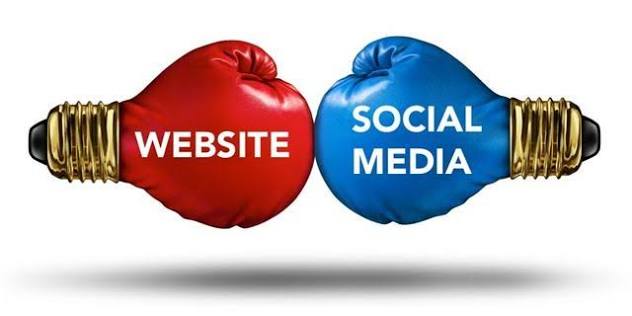
Social media is excellent for discovery, engagement and showing the human side of your business, but it isn't a substitute for a website you own and control. Platforms change algorithms, restrict accounts and bury content without warning — none of which happens to a website you control yourself.
The most effective use of social media for most small businesses is as a feeder channel: build interest and personality there, then link consistently back to your website where visitors can actually learn more and take action. The comparison in website vs social media goes into more detail on how the two channels complement each other.
Email marketing: the underrated long-term asset
Unlike social media followers, an email list is a genuine owned asset — nobody can take it away or bury it in an algorithm. For businesses with repeat customers or considered purchase cycles, a simple email list is one of the highest-return channels available, because you're reaching people who've already shown interest, directly, without paying per message.
Keep it practical:
- Collect emails naturally through your website (a newsletter signup, a quote follow-up, a booking confirmation).
- Send only when you have something genuinely useful to say — a seasonal tip, a helpful update, a real offer.
- Avoid overly frequent or purely promotional emails, which drive unsubscribes fast.
Content marketing: the thread that ties it together
Useful content — blog posts, guides, FAQs — does double duty. It supports your SEO by giving search engines genuine, relevant material to rank, and it gives you something worth sharing on social media and in email. A Dubbo accountant writing a clear, honest explainer on a common tax question their clients actually ask is doing more useful marketing than a dozen generic promotional posts.
The key is answering real questions your actual customers have, in plain language, rather than writing for search engines first and people second.
Comparing the main channels
| Channel | Speed to results | Ongoing cost | Longevity | Best for |
|---|---|---|---|---|
| Website | Immediate once live | Low (maintenance) | Long-term, owned | Converting visitors, building trust |
| SEO | Months | Low to moderate | Compounds over time | Sustainable organic traffic |
| Google Ads | Immediate | Ongoing, pay-per-click | Stops when spend stops | Fast results, seasonal pushes |
| Social media | Fast for engagement | Low cost, high time | Content buried quickly | Discovery, relationships, personality |
| Email marketing | Fast once list exists | Very low | Owned, durable | Repeat business, nurturing leads |
| Content/blog | Months | Low to moderate | Compounds, supports SEO | Trust, search visibility, shareable material |
A sensible order to tackle all of this
Trying to do everything at once is how small businesses burn out on marketing within a few months. A more realistic order:
- Fix your website's fundamentals — speed, clarity, trust, calls to action.
- Set up and complete your Google Business Profile, since it's free and directly affects local search visibility.
- Build basic SEO foundations on your key pages.
- Start an email list, even a simple one, from day one.
- Add social media as a discovery and relationship channel, feeding back to your website.
- Layer in Google Ads once your website reliably converts, for faster or seasonal results.
- Invest in content consistently over time to compound both SEO and trust.
Don't neglect security and maintenance
None of this marketing effort matters if your website goes down, gets hacked, or slows to a crawl from neglect. A compromised or broken site can undo months of marketing work overnight, and search engines take a dim view of insecure sites too. The website security guide covers the basics every small business site needs in place.
Key Takeaways
- Fix your website's ability to convert before investing heavily in traffic-generating channels.
- SEO and Google Ads solve different problems — durable long-term visibility versus fast, immediate results.
- Social media and email are complementary tools, not replacements for a website you own and control.
- Content marketing supports both SEO and trust simultaneously when it genuinely answers real customer questions.
- Tackle channels in a sensible order rather than attempting everything at once.
Frequently Asked Questions
Where should a small business start with digital marketing?
Start with your website. If it isn't fast, clear and easy to contact you through, every other marketing channel you invest in will convert poorly. Fixing that foundation first makes every dollar spent afterward on SEO, ads or social media work harder.
Is SEO or Google Ads better for a small business?
Neither is universally better — they solve different problems. SEO builds durable, compounding traffic over months without ongoing per-click spend; Google Ads delivers immediate visibility for a continuous cost. Many small businesses benefit from using both.
How much should a small business spend on digital marketing?
It depends heavily on your industry, competition and goals, so there's no universal figure. A sensible approach is to make sure your website converts well first, then invest incrementally in the channels that show measurable results for your specific business.
Do I need to be active on every social media platform?
No. It's far more effective to be genuinely active and useful on one or two platforms where your actual customers spend time than to spread thin across every platform half-heartedly.
Is email marketing still worth it for small businesses?
Yes. It's one of the few channels you fully own, with no algorithm deciding who sees your message. For businesses with repeat customers, it's often one of the highest-return channels available, provided it's used thoughtfully rather than for constant promotion.
How long does digital marketing take to show results?
It varies by channel. Paid advertising can show results within days; SEO and content marketing typically take months to build momentum but keep compounding afterward. A realistic plan blends fast wins with longer-term investment.
Can I handle digital marketing myself, or do I need to hire someone?
Many small business owners handle the basics themselves, particularly social media and simple email marketing. Website development, SEO and paid advertising strategy often benefit from professional input, since mistakes there can be costly and hard to reverse.
What's the biggest mistake small businesses make with digital marketing?
Investing in traffic — ads, social media growth, content — before making sure the website itself can actually convert that traffic into enquiries. It's the equivalent of pouring water into a leaking bucket.
Get a marketing plan that actually fits your business
Digital marketing works best as a connected system, not a grab-bag of tactics. If you'd like a clear, realistic plan built around your business and your budget, have a chat with Pixel and Pine.