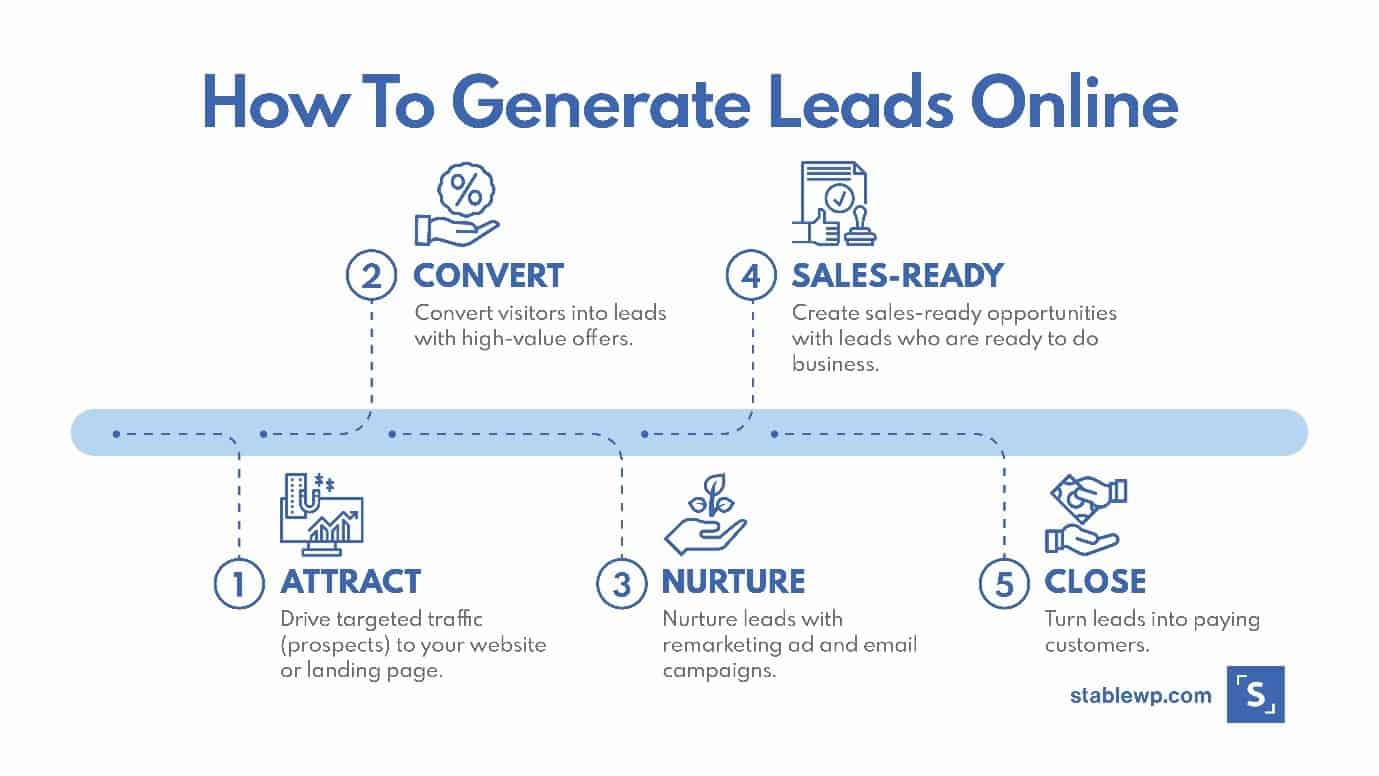
Plenty of small business websites get a steady trickle of visitors and almost nothing to show for it — no calls, no form submissions, no bookings. That gap between traffic and leads is one of the most common (and most frustrating) problems business owners bring to a web designer, and it's almost always fixable without a full rebuild. Here's where leads actually come from, and where they're quietly being lost.
Start by understanding why leads aren't showing up
Before changing anything, it's worth being honest about where the problem sits. Generally it's one of three things: visitors can't quickly understand what you offer, they don't trust you enough to make contact, or the path to actually contacting you is harder than it should be. Most websites have at least a little of all three, and fixing them tends to be more valuable than adding new pages or fancier design. This is covered in depth in why your website isn't generating leads, which is worth reading alongside the fixes below.
Make your offer instantly clear
If a visitor has to scroll and read for ten seconds to work out what you actually do, you've already lost a chunk of them. Your homepage headline should say plainly what you do and who it's for — "Emergency plumber servicing Geelong and surrounds" beats a clever tagline every time.
Test this yourself: show your homepage to someone unfamiliar with your business for five seconds, then ask what you do. If they can't answer clearly, your messaging needs simplifying, not your design.
Give every page one clear next step
A lead-generating website treats every page as an opportunity, not just the contact page. Service pages, blog posts and even your about page should each point toward one obvious action — call now, request a quote, book a consultation.
Strong calls to action tend to share these traits:
- Specific and benefit-led — "Get my free quote" rather than "Submit".
- Visible without scrolling, and repeated further down on longer pages.
- Low effort to complete — a short form beats a long one every time.
- Consistent throughout the site, so visitors always know what to do next.
Shorten your forms
Long, complicated contact forms are one of the biggest silent lead-killers. Every additional field is another chance for a visitor to give up partway through. Ask only for what you genuinely need to respond — usually name, contact details and a short message. You can always ask follow-up questions once you're talking to a real, interested person.
A Ballarat building company that trims its quote request form from twelve fields down to five will typically see more submissions, not fewer — because more people actually finish it.
Build trust before you ask for the enquiry
People rarely contact a business they don't yet trust, especially for anything beyond a small purchase. Trust signals do a lot of the persuading before the enquiry form is even reached:
- Genuine testimonials and reviews, ideally specific rather than vague.
- Real photos of your work, premises or team — not generic stock imagery.
- Clear credentials, licences or years of experience where relevant.
- Transparent information about pricing, process or what to expect.
Use urgency and specificity honestly
Vague, generic copy doesn't compel anyone to act now rather than later. Specific, honest detail does. "Book your gutter clean before storm season" gives a real reason to act now; "Contact us for a free quote" is forgettable because it could apply to anyone, anywhere. Look for genuine, honest reasons a visitor should enquire today rather than bookmark the page and forget about it.
Make mobile the primary experience, not an afterthought
Most enquiries now start on a phone, often while the visitor is doing something else — waiting at the school pickup, on a lunch break, between jobs. If your contact form is fiddly to fill in on a small screen, or your phone number isn't tap-to-call, you're actively losing leads that were ready to convert. Check your own site on your own phone regularly; it's the fastest way to catch this kind of friction.
Add proof through content, not just claims
A blog post genuinely answering a question your customers actually ask — "how much does X cost", "how long does Y take", "what should I look for in Z" — builds trust and search visibility at the same time. It also gives you something worth sharing when someone asks for a recommendation. This kind of useful content complements paid traffic too; if you're weighing up where to invest, seo vs Google Ads explains how the two approaches work together rather than competing.
Track where leads actually come from
You can't improve what you don't measure. At minimum, track:
- How many enquiries you receive per week or month.
- Which pages they came from, where possible.
- What percentage of website visitors convert into an enquiry.
Even simple tracking — asking new customers how they found you — reveals patterns worth acting on.
Key Takeaways
- Most lead problems come down to unclear messaging, low trust, or friction in the contact process.
- Every page should have one clear, specific call to action, not just the contact page.
- Shorter forms consistently generate more completed enquiries than longer ones.
- Genuine trust signals and specific, honest content do real persuasive work before the form is even opened.
- Mobile usability is essential, since most enquiries now start on a phone.
Frequently Asked Questions
Why does my website get traffic but no leads?
This usually means visitors arrive but don't find what they need to trust you or act — unclear messaging, a lack of proof, or a hard-to-use contact process are the most common culprits. Traffic without conversion is a sign the site itself needs attention, not necessarily more marketing spend.
What's the fastest way to generate more leads from an existing website?
Shortening your contact form and adding a clear, specific call to action near the top of your key pages tends to produce the quickest results, often within days. These are small changes that remove friction rather than requiring a redesign.
How many form fields should a lead-generation form have?
As few as you genuinely need to make first contact — usually name, phone or email, and a short message. You can gather more detail once you're speaking with a real, interested lead.
Do testimonials really help generate leads?
Yes, particularly for considered purchases like trades, healthcare or professional services, where trust matters as much as price. Specific, genuine testimonials work far better than vague, generic praise.
Should I use pop-ups to capture more leads?
Used sparingly and with a genuinely useful offer, pop-ups can work. Overused or poorly timed pop-ups tend to annoy visitors and drive them away, so they're worth testing carefully rather than adding by default.
Is paid advertising a good way to generate more leads?
It can be, but only once your website reliably converts the visitors it already gets. Sending paid traffic to a site with weak conversion just means a higher cost per lead. Check your website checklist before running Google Ads first.
How do I know which pages on my site are generating leads?
Basic analytics combined with simply asking new customers how they found you will usually reveal the pattern. Over time you'll see which pages, and which calls to action, are pulling their weight.
Can blog content actually generate leads?
Yes, when it genuinely answers questions your real customers are searching for. It builds trust, supports search visibility, and gives you something to point people toward when they ask for advice — all of which feed into more enquiries over time.
Get a website that turns visitors into leads
If your website has traffic but not enough enquiries to show for it, the fix is usually more straightforward than people expect. Have a chat with Pixel and Pine about a practical, no-nonsense review of what's holding your leads back.