If you've spent any time reading about SEO, you've probably run into the acronym E-E-A-T and wondered whether it's something you actually need to act on, or just more industry jargon. It's the latter's opposite — E-E-A-T is one of the more genuinely useful frameworks Google has published, because it maps almost exactly onto what makes a real customer trust a real business. A Mandurah accounting firm and a Ballarat cosmetic clinic both need it, just expressed differently.
What E-E-A-T stands for
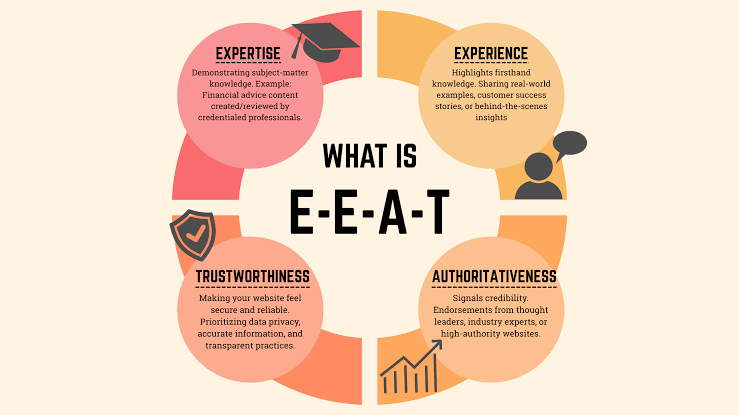
E-E-A-T is shorthand from Google's Search Quality Rater Guidelines — the document Google gives to human quality raters who help evaluate search result quality. It stands for:
- Experience — has the creator actually done or used the thing they're writing about?
- Expertise — does the creator have genuine knowledge or skill in the subject?
- Authoritativeness — is the creator or website recognised as a go-to source on this subject?
- Trust — can readers rely on the information and the business behind it being accurate and honest?
Google has been explicit that trust is the most important of the four — the others largely exist to build toward it. A site can have plenty of experience and expertise on display, but if it feels untrustworthy (hidden business details, no way to verify who's behind it, misleading claims), it undermines everything else.
Why E-E-A-T matters more for some businesses than others
Google pays particularly close attention to E-E-A-T on what it calls "Your Money or Your Life" topics — anything touching health, finance, safety or major life decisions. A Toowoomba physiotherapist writing about rehabilitation exercises, or a Newcastle mortgage broker writing about home loan options, is held to a noticeably higher bar than a business writing about, say, decorative homewares. That's not a reason to ignore E-E-A-T if you're in a lower-stakes industry — it's simply where the effort matters most urgently.
How to demonstrate experience
Show, don't just claim, that you've actually done the thing. Concrete ways to demonstrate real experience:
- First-hand photos of your own work, not stock imagery.
- Specific details only someone who's actually done the job would know (a Bendigo landscaper describing how local clay soil affects drainage design, for instance).
- Case studies describing a real project from start to finish.
- Author bios that mention relevant hands-on background, not just qualifications.
How to demonstrate expertise
Expertise is about depth of knowledge, communicated clearly:
- Publish content that goes genuinely deeper than a surface-level summary.
- Credit content to a named person with relevant credentials or experience, where appropriate.
- Keep content accurate and updated — outdated advice (old tax thresholds, superseded regulations) undermines expertise fast.
- Answer the follow-up questions a genuine expert would anticipate, not just the obvious first question.
How to demonstrate authoritativeness
Authoritativeness is largely earned through recognition from outside your own website:
- Being mentioned, quoted or linked to by other reputable local or industry sites.
- Memberships or accreditations with recognised industry bodies, clearly displayed.
- A consistent, professional presence across your website, Google Business Profile and other listings.
- Genuine customer reviews that reinforce your claims.
How to demonstrate trust
Trust ties everything together, and it's often the easiest to fix with small, concrete changes:
| Trust signal | Example |
|---|---|
| Clear contact information | Real phone number, email and physical address, not just a form |
| Transparent business details | ABN, licence numbers where relevant, physical location |
| Secure website | HTTPS throughout, no browser security warnings |
| Genuine reviews | Real customer reviews, visible and responded to |
| Accurate, current content | No outdated prices, regulations or broken claims |
| Clear privacy and terms | Easy-to-find privacy policy and terms of service |
A Wagga Wagga solicitor's website that clearly displays practice details, individual solicitor bios with real qualifications, and genuine client reviews sends a far stronger trust signal than one with a vague "About Us" paragraph and no named staff at all.
E-E-A-T isn't a checkbox — it's a mindset
Rather than treating E-E-A-T as a technical box to tick, think of it as a filter for every piece of content you publish: would a genuinely knowledgeable, trustworthy business in this field have written this? If the answer is yes, you're generally on the right track. If your content reads like it was written to satisfy a search engine rather than help a real customer, it's worth rewriting.
E-E-A-T and topical authority reinforce each other
Building genuine topical authority — covering your subject thoroughly and connecting it well through internal linking — is one of the clearest ways to demonstrate expertise and authoritativeness at the same time. The two concepts aren't separate SEO tasks; they support the same underlying goal of being a genuinely credible source.
Key Takeaways
- E-E-A-T stands for experience, expertise, authoritativeness and trust, with trust being the most important.
- It matters most for health, finance, safety and other high-stakes topics, but helps every business.
- Demonstrate experience and expertise through genuine, specific, first-hand content.
- Build authoritativeness through outside recognition — reviews, mentions, accreditations.
- Trust is often the easiest to fix quickly: clear contact details, real reviews, accurate content.
Frequently Asked Questions
Is E-E-A-T a ranking factor?
E-E-A-T itself isn't a single measurable ranking factor, but it reflects the qualities Google's systems are designed to reward. Treat it as a framework for content quality that indirectly, but genuinely, supports rankings.
What industries does E-E-A-T matter most for?
It matters most for topics that could affect someone's health, finances, safety or major life decisions — medical, legal, financial services and similar fields. These face closer scrutiny, though every business benefits from demonstrating it.
How do I show expertise if I don't have formal qualifications?
Genuine hands-on experience and a demonstrated track record count for a great deal. Specific, detailed, accurate content that reflects real practical knowledge often demonstrates expertise as convincingly as formal credentials.
Does having author bios on blog posts actually help?
Yes. A named author with relevant, genuine background gives both readers and search engines a clearer signal that real expertise sits behind the content, rather than anonymous, unaccountable text.
Can a small business really compete on E-E-A-T against big brands?
Yes — local, specific, first-hand expertise often reads as more credible than generic corporate content. A tradie who clearly knows their local conditions and has genuine reviews can out-trust a much larger, more impersonal competitor.
How do reviews affect E-E-A-T?
Reviews are a strong, visible trust signal both to readers and to how search engines assess your reputation. Genuine, responded-to reviews consistently reinforce the trust component of E-E-A-T.
Should I remove old content that no longer reflects E-E-A-T well?
Update it where possible rather than removing it outright — outdated but fixable content is often better refreshed with current information than deleted, especially if it's ranking or gets regular traffic.
Is E-E-A-T only about written content?
No. It applies to your whole site presence — contact details, business information, reviews, security and design all contribute to the overall trust picture, not just blog posts.
Build a site people (and Google) actually trust
E-E-A-T isn't a trick to game — it's a genuine description of what makes a business credible online. If you'd like help auditing your site against it, have a chat with Pixel and Pine and we'll show you exactly where the gaps are.