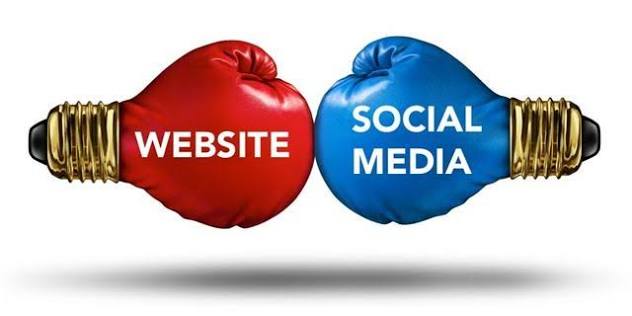
"Should we be on Google or Facebook?" is one of the first questions almost every small business owner asks once they're ready to spend money on advertising. The honest answer is that they solve different problems, and plenty of Australian businesses eventually use both. But if you've got one budget and need to pick a starting point, understanding how each platform actually works will save you from an expensive guess.
The core difference: intent vs interest
Google Ads shows up when someone is actively searching for something — "roof repairs Toowoomba" or "family lawyer Parramatta". That person has a problem right now and is looking for a solution. You're capturing existing demand.
Facebook Ads (which also covers Instagram) shows up while someone is scrolling their feed, not searching for anything in particular. You're interrupting their day with something you hope catches their eye — a new cafe opening in Fremantle, a home renovation before-and-after, a limited-time offer. You're creating demand, or at least surfacing it before the person knew they had it.
Neither approach is better in the abstract. The right choice depends on whether your customers search for what you sell, or need to be shown it.
Google Ads vs Facebook Ads at a glance
| Google Ads | Facebook Ads | |
|---|---|---|
| How it targets | Keywords people search for | Interests, demographics, behaviours |
| Best for | Capturing existing demand (urgent or considered purchases) | Building awareness, visual products, impulse or discovery purchases |
| Typical use case | Emergency trades, legal services, healthcare, B2B | Retail, hospitality, home decor, fitness, events |
| Ad format | Mostly text, some Shopping and visual formats | Highly visual — images, video, carousels |
| Buyer intent | High — they're already looking | Lower — you're introducing the idea |
| Speed to first lead | Often fast, since demand already exists | Can be fast for awareness, slower for direct sales |
| Learning curve | Moderate — keyword and match type logic | Moderate — audience and creative testing |
| Ongoing effort | Bid and keyword management, landing pages | Fresh creative needed regularly to avoid fatigue |
When Google Ads tends to win
Google Ads usually performs better when:
- Your customer has a problem right now and searches for a solution — a burst pipe, a toothache, a court date.
- You sell a considered purchase people research before buying, like a bathroom renovation or an accounting service.
- Your service area is local and specific, and you want to appear only for people actively searching within it.
- You already have decent search volume for the terms your customers use.
A Geelong emergency electrician is a textbook example — nobody is scrolling Instagram hoping to discover an electrician, but plenty of people are frantically searching Google when the power goes out.
When Facebook Ads tends to win
Facebook Ads tends to be stronger when:
- Your product or service is visual and benefits from being seen, not just described — furniture, fashion, food, fitness studios.
- You're building awareness for something new that people don't yet know they want or need.
- You want to retarget people who've visited your site but haven't bought — reminding a browser about the jacket they looked at last week.
- Your business relies on repeat engagement and community, like a local gym or a boutique retailer building a following.
A Byron Bay swimwear brand or a new Adelaide cafe often gets more traction introducing itself visually on Facebook and Instagram than waiting for people to search for it by name.
What they have in common
Regardless of which platform you choose, the same fundamentals decide whether your spend pays off:
- Clear targeting. Vague targeting wastes budget on people who were never going to convert, on either platform.
- A landing page that matches the promise. If your ad promises a fast quote and the page is a wall of text, you lose the sale you already paid for.
- Tracking that actually works. Without conversion tracking, you're optimising by gut feeling instead of data.
- Ongoing management. Neither platform is "set and forget" — both need regular review and refinement to keep costs sane. See how to reduce your cost per lead for principles that apply to both.
If your ads are generating clicks but not enquiries on either platform, the problem usually isn't the platform itself — it's what happens after the click. Our guide on why your ads are not converting covers the most common culprits.
Can you run both?
Plenty of established Australian businesses do, and they complement each other well. A common pattern: run Google Ads to capture people actively searching, and use Facebook to build awareness and retarget people who've visited your site but didn't enquire. If your budget only stretches to one platform right now, pick based on whether your customers are searching for you or need to be introduced to you, and revisit the decision once you have a track record to work from.
Key Takeaways
- Google Ads captures existing demand from people already searching; Facebook Ads creates or surfaces demand from people who weren't looking.
- Urgent, local, considered-purchase services tend to do better on Google Ads.
- Visual, discovery-led and awareness-building products tend to do better on Facebook Ads.
- Both need a solid landing page and proper tracking to actually convert — the platform is only half the equation.
Frequently Asked Questions
Which is cheaper, Google Ads or Facebook Ads?
Cost varies enormously by industry and competition on both platforms, so there's no fixed answer. What matters more than the raw cost per click is your cost per lead and, ultimately, cost per customer — a more expensive click that converts is cheaper in the end than a bargain click that never enquires.
Can a small business run both Google Ads and Facebook Ads at once?
Yes, and many do successfully once they have the budget and time to manage both properly. A common approach is Google Ads for people actively searching and Facebook for awareness and retargeting, but running both well takes more effort than running one, so only add the second once the first is working.
Which platform is better for a local trade business?
Google Ads usually wins for trades, because customers tend to search for help exactly when they need it — a blocked drain, a broken air conditioner. Facebook can still play a supporting role for brand awareness or reviews, but it's rarely the primary lead source for urgent trade work.
Do Facebook Ads work for B2B businesses?
They can, particularly for awareness and remarketing, but B2B buyers researching a considered purchase often turn to Google search at some point in their decision. Many B2B businesses find Google Ads delivers more direct enquiries, with Facebook supporting brand visibility.
How long does it take to see results from either platform?
Both can generate clicks and initial activity almost immediately after launch. Genuinely reliable, optimised results usually take several weeks as you gather data, refine targeting and improve your landing pages based on real performance.
Do I need different creative or copy for each platform?
Yes. Google Ads copy needs to match what someone typed into the search bar and answer their intent directly. Facebook ad creative needs to stop the scroll visually first, then earn the click — it's a different job entirely, so don't just repurpose the same assets across both.
What's the biggest mistake businesses make choosing between them?
Picking a platform because a competitor uses it, rather than because it matches how their own customers actually behave. The right starting point depends on whether your customers search for solutions or need to be introduced to them — not what worked for someone else's business.
Should I choose Google Ads, Facebook Ads, or SEO first?
It depends on your timeline and budget. Ads (Google or Facebook) bring faster results for a cost per click; SEO builds slower but keeps working without ongoing per-click cost. Our SEO vs Google Ads guide breaks down how to prioritise based on your situation.
Get advertising that matches how your customers actually buy
The right platform isn't the one with the biggest name — it's the one that matches how your customers actually find and choose businesses like yours. If you'd like help deciding between Google Ads, Facebook Ads, or both, have a chat with Pixel and Pine.