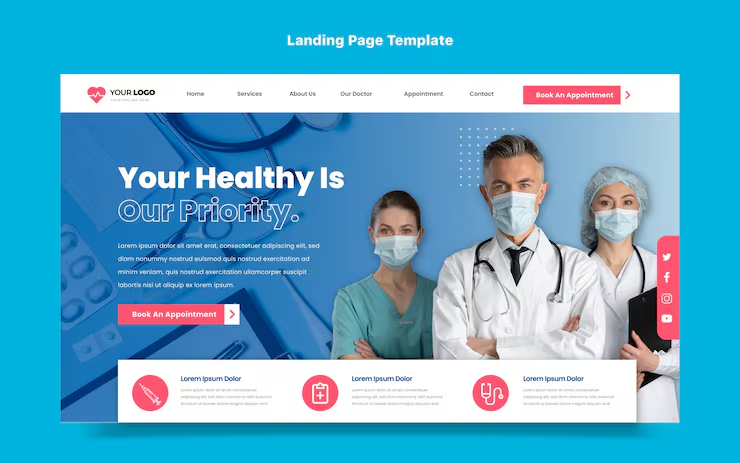
Someone searching for a new GP isn't browsing for fun. They've just moved to town, their old doctor retired, or they need an appointment this week and don't know who's taking new patients. They want three answers fast: is this clinic taking new patients, does it bulk bill, and how do I actually book. A GP clinic in Cairns that answers all three on the homepage wins that visit over a competitor with a vague "contact us" page, every time.
What Patients Actually Want From A Clinic Website
Before choosing fonts or colours, it helps to know what someone is really trying to find out on a GP website. Almost every visitor is checking for one of these:
- Is this clinic accepting new patients right now? This status changes often, and patients need today's answer, not last year's.
- Do they bulk bill, or what will this cost? For many Australians, this single detail decides which clinic they call.
- Can I book without sitting on hold? People increasingly expect to book online, any time of day.
- Where is it, what are the hours, and is there parking? Basic and practical, yet often missing or buried three clicks deep.
A clinic that answers these clearly, above the fold, removes the "will I even get in" anxiety before the patient has to pick up the phone. This is the same principle behind why your business needs a professional website — the site is doing first-impression work that used to fall to a receptionist, except it's working at 11pm on a Sunday too.
Must-Have Website Features For A Medical Clinic
Some of these are nice extras for other businesses. For a GP practice, they're closer to essential.
| Feature | Why It Matters |
|---|---|
| Online booking integration | Lets patients book without waiting on hold during a busy morning |
| Clear bulk billing / fee information | Removes cost uncertainty, often the deciding factor in choosing a GP |
| Current "new patients" status | Stops people wasting a trip or call on a closed-books clinic |
| Doctor bios with areas of interest | Helps patients pick a GP suited to them, building familiarity in advance |
| Telehealth information | Explains when a phone or video consult is an option instead of an in-person visit |
| Prominent opening hours | Sets expectations for weekend and after-hours access, avoiding frustrated calls |
| Clear emergency vs routine guidance | Sends genuine emergencies to 000 or hospital, and directs urgent same-day needs to the clinic's own process |
| Plain-language services list | Explains consultations, immunisations, health checks and skin checks without jargon |
Online Booking Removes The Biggest Barrier
A phone engaged for twenty minutes on a Monday morning is the top reason patients give up and try elsewhere. A proper healthcare booking platform — showing real available slots and synced with the practice's system — lets a patient book a check-up at 9pm without remembering to call back, and spreads bookings more evenly than reception juggling a full phone line and a walk-in queue at once.
Bulk Billing Information Should Never Be Hidden
Many patients choose a GP on bulk billing alone, and vague or missing information reads as a red flag. State clearly whether the clinic bulk bills everyone, only concession card holders, or charges a gap fee, and roughly what that gap is. This page often gets more traffic than any other on a GP site, so it belongs in the main menu, not a footnote.
Keeping "New Patients Welcome" Genuinely Current
Few things frustrate patients more than finding a clinic online only to be told the books closed months ago. This status needs to be something the practice manager can update in minutes, not something that requires calling a developer. A simple, prominent banner — "Currently welcoming new patients" or "Books closed, here's what to do instead" — protects both the patient's time and the clinic's reputation.
Doctor Bios Build Familiarity Before The First Visit
A short bio for each GP — photo, areas of clinical interest, languages spoken if relevant to the local community, and years practising — helps a patient choose someone who suits them rather than whoever happens to answer the phone. It's also worth noting AHPRA registration generally on the team page.
Telehealth, Explained Simply
If the clinic offers telehealth, say so clearly, including which appointment types qualify and how to book one. Patients managing a repeat prescription or a straightforward follow-up often prefer it.
Emergency Versus Routine: A Distinction Worth Getting Right
This is one area where vague copy isn't just poor design — it can genuinely put a patient at risk. A website should never imply, even by omission, that it's the right channel for a medical emergency.
- State plainly that genuine emergencies should go to 000 or the nearest hospital emergency department, not the clinic's contact form or booking widget.
- Separately explain the clinic's own process for urgent but non-emergency same-day needs, such as a same-day appointment line or a set number of slots released each morning.
- Keep this messaging near the top of the homepage and contact page, not buried in a footer.
Local SEO For GP Clinics In Australia
Very few people search for "general practice" in the abstract. They search for "GP near me" or "bulk billing doctor" followed by their suburb, usually when they need an appointment soon, which makes local search visibility one of the highest-value investments a clinic can make.
- Google Business Profile: a complete profile with accurate health categories, correct current hours, real clinic photos and an up-to-date new patients status often determines whether a clinic appears in local map results at all. It's free to maintain and frequently neglected.
- Reviews: patients weigh reviews heavily, particularly around wait times and reception experience. A steady flow of honest reviews gathered by simply asking patients matters far more than chasing a perfect score, and reviews should never be fabricated or incentivised.
- Multi-site practices: each location needs its own page with its own address, phone number, hours and doctor list, rather than one page covering every site, so each can rank for its own local searches.
Trust Signals That Reassure Patients
Choosing a GP is built on trust, and the website should work hard to earn it:
- AHPRA registration mentioned generally for the clinic's doctors
- Accreditation status, such as being a RACGP-accredited practice, mentioned where relevant
- Real, current photography of the actual clinic and doctors, not generic stock photos of an unrelated waiting room
- Genuine patient reviews, including ordinary ones, not just five-star testimonials
- A clear statement on how patient health information is handled and kept private
A well-organised about page covering these points, alongside a professional-looking site overall, does most of the work. If you're weighing a rebuild versus a smaller refresh, the small business website checklist is a solid starting point for working out what's genuinely needed first.
Common Mistakes Medical Clinic Websites Make
- No online booking, forcing every patient onto a phone queue at the busiest time of day
- An outdated "accepting new patients" status, left wrong for months and quietly costing the clinic new enrolments
- No bulk billing clarity, leaving cost-conscious patients to guess and often choose elsewhere
- Generic overseas stock photography of stethoscopes and unrelated waiting rooms that don't reflect the real clinic
- Opening hours buried several clicks deep, or missing weekend and after-hours arrangements entirely
- Ambiguous emergency guidance, which isn't just a design flaw but a genuine safety issue if a patient can't quickly tell where to go
Many of these problems trace back to choosing the wrong agency or platform in the first place. If you're comparing providers, how to choose a web design agency covers the questions worth asking before signing anything.
Key Takeaways
- Patients want three things fast: new patient status, bulk billing clarity, and an easy way to book
- Online booking reduces phone queue pressure and spreads appointments more evenly across the day
- New patient status must be easy for staff to update themselves, since it changes often
- Emergency versus routine guidance needs to be unambiguous, for genuine patient safety
- Local SEO through Google Business Profile and honest reviews drives most "GP near me" traffic
- Real photography of the actual clinic and doctors builds more trust than any stock image
Frequently Asked Questions
Do GP clinics really need online booking, or is a phone line enough?
A phone line alone consistently loses bookings to hold times and missed calls. Online booking synced to real availability captures patients who'd rather book outside office hours, without replacing the phone for those who prefer to call.
Should we display our bulk billing status even if it varies by patient type?
Yes. Explain the general policy clearly, such as bulk billing for concession card holders and a gap fee for others, rather than leaving it blank. Vague pricing tends to be read as expensive by default.
How often should the "new patients" status be updated?
As often as it actually changes, which for many clinics is every few weeks or months. Reception staff should be able to update it themselves in minutes.
What's the right way to handle medical emergencies on the website?
State plainly that genuine emergencies should go to 000 or the nearest hospital, never the website's contact form. Separately explain how patients can get a same-day appointment for urgent but non-emergency issues.
Is telehealth worth explaining in detail on the site?
If the clinic offers it, yes. Patients often aren't sure what qualifies for a telehealth consult, so a short, plain-language explanation of what's suitable reduces unnecessary calls.
We have more than one clinic location — should each have its own page?
Yes. Each location should have its own address, phone number, hours and doctor list, so it can rank for its own local searches.
Getting Your Clinic Website Right
A GP clinic website has a specific job: help a patient work out quickly whether they can get in, what it'll cost, and how to book, without waiting on hold to find out. That means current new patient status, upfront bulk billing information, genuine photography, and a clear, unambiguous line between emergencies and routine care. If your current site is leaving patients guessing, or you're planning a refresh and want an outside view, have a chat with Pixel and Pine.