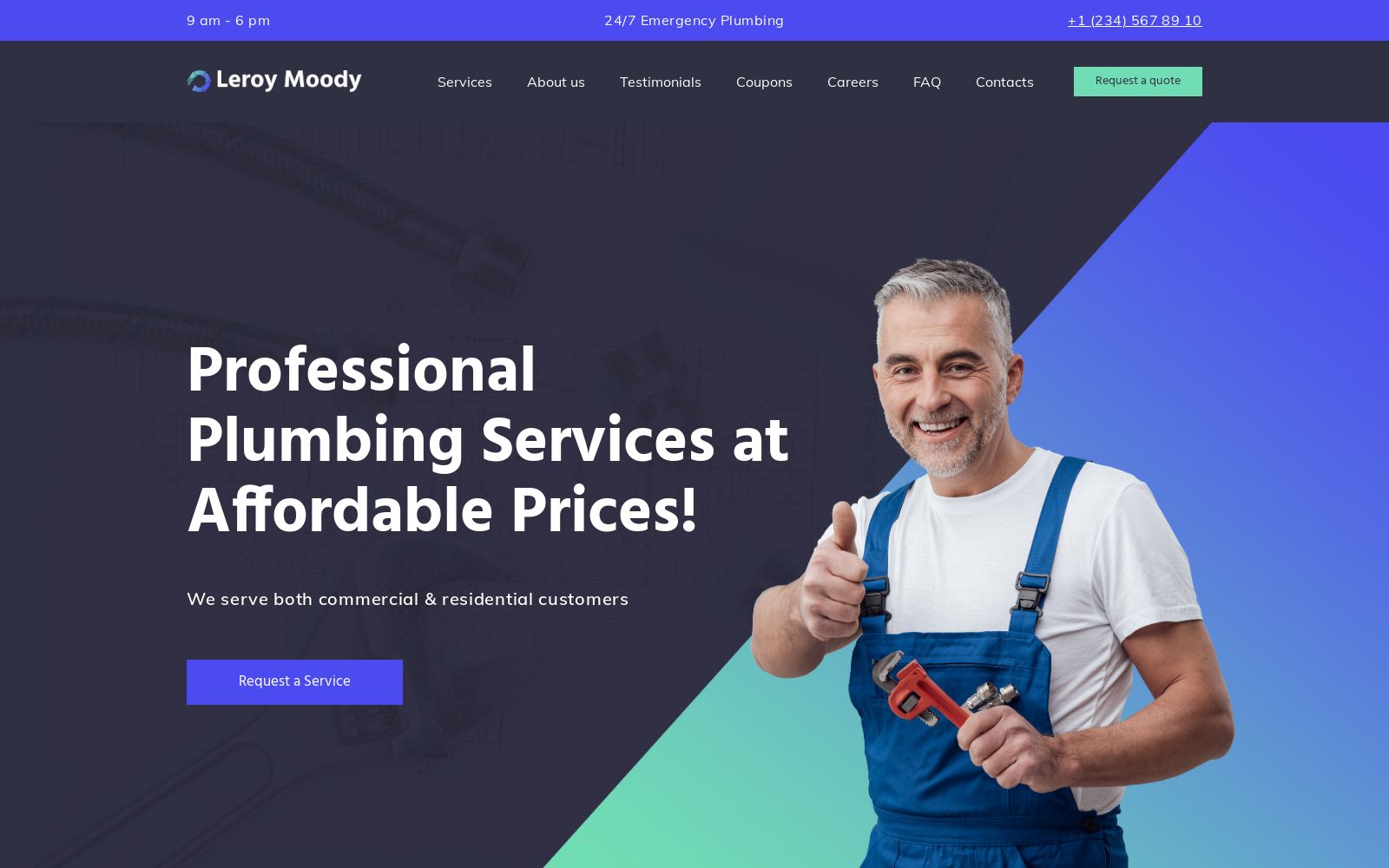
When a hot water system dies on a Sunday morning or a pipe bursts under the kitchen sink, nobody sits down to read your company history. They grab their phone, search "emergency plumber near me" or "plumber [suburb]", and tap the first result that looks like it can help right now. If your website makes them hunt for a phone number, guess whether you're licensed, or wait on a contact form, they're already calling the next plumber on the list. Good plumber website design isn't about looking flashy — it's about answering three questions fast: can you fix this, are you nearby, and can I trust you.
What someone searching for a plumber is actually trying to find out
Picture a homeowner in Geelong at 6am with water pooling under the laundry sink. They're not browsing — they're panicking, and they've got one thing on their mind: who can come now. A minute later, a different search from the same suburb: a bathroom renovation, no rush, happy to fill in a form and wait for a quote.
Your website has to serve both of these people, often in the same week. That means:
- Instant proof you can help — services listed clearly, no jargon, no scrolling
- Obvious proof you're local — confirmation you actually cover their suburb, not just "the region"
- Fast contact, matched to urgency — a phone number for the burst pipe, a form for the renovation
- Reassurance you're the real deal — licensed, insured, not about to disappear with a deposit
If your site doesn't nail these in the first screen a visitor sees, you've lost the job before they've read a word of your "About Us" page. That's why a professional, purpose-built website matters more for trades than almost any other business type — a bad first impression costs you money immediately.
What a plumber's website must do
Before you touch colours or fonts, get the fundamentals right:
| Must-have feature | Why it matters |
|---|---|
| Tap-to-call emergency number in the header | Burst pipes and blocked drains are emergencies — customers won't fill in a form, they'll tap and call |
| Online quote/booking form | Captures non-urgent jobs (renovations, installations) that customers are happy to schedule later |
| Licence number and insurance details | Australian consumers can and do check trade licences — hiding this looks like you have something to hide |
| Service area list or map | Plumbing is hyper-local; people want to know you actually cover their suburb before they call |
| Before/after photo gallery | Shows real workmanship on hot water systems, bathrooms and gas fitting — builds confidence fast |
| Reviews and Google rating | Independent proof you turn up, do good work, and don't overcharge |
| Clear services list | Blocked drains, hot water, gas fitting, roof leaks, renovations — spelled out, not buried in a PDF |
| Fast-loading, mobile-first design | Most of these searches happen on a phone, often on patchy reception, standing next to a leaking pipe |
Make the phone number impossible to miss
This is the single biggest mistake trade websites make: burying the phone number in a footer or, worse, only offering a contact form. If it's in tiny grey text under three menus, that's a lost emergency call — and probably a lost customer for good, because next time they'll just search again.
Do this instead:
- Put a tap-to-call button in the header on every page, not just the homepage.
- Make it sticky on mobile so it stays visible while someone scrolls.
- Label it clearly — "Call Now" or "24/7 Emergency Line" beats a plain number with no context.
- Repeat the number in the footer, and say plainly if you offer after-hours emergency work.
Give non-urgent customers an easy way to book
Not every enquiry is a crisis. Bathroom renovations, hot water system replacements, gas fitting for a new stove — these customers are comparing quotes and thinking it through. For them, a simple online quote form works better than forcing a phone call:
- Ask for the basics only: name, suburb, phone, job type, and a short description
- Let them attach a photo (a cracked tile, an old hot water unit) so you can quote more accurately
- Set expectations — "We'll call you back within one business day" — so they're not left wondering
- Flag urgent-sounding words like "leaking" for a same-day callback, even if it came through the form
Clear, specific website copy matters here too — "blocked drain clearing" converts better than vague phrases like "plumbing solutions."
Prove you're licensed, insured and worth trusting
Plumbing is a licensed trade in every Australian state, and increasingly, homeowners check. A licence number displayed near your services, alongside your insurance status, satisfies the cautious researcher and quietly signals to everyone else that you're not cutting corners.
Other trust signals worth including:
- Years trading — "servicing Geelong and surrounds since [year]" carries real weight
- Brand associations — if you're an authorised installer for Rheem or Rinnai hot water systems, say so
- Genuine reviews — pull them from Google rather than writing your own
- Real photos — your actual van, team and finished jobs. Stock photos fool nobody and undercut everything else on the page
Show exactly where you work
Plumbers don't compete nationally — they compete suburb by suburb. A dedicated service area section does real work for local search visibility and answers the customer's question directly: do you cover me? A Geelong-based plumber is better off listing Geelong, Newtown, Highton and Belmont by name than hiding behind a vague "Greater Geelong region" — search engines and customers both respond better to specifics.
This ties directly into local SEO:
- Keep your name, address and phone number (NAP) identical across your website, Google Business Profile, and directories
- Fully complete your Google Business Profile, with services, service areas, hours and photos kept current
- Encourage reviews after every job — they're one of the strongest local ranking and trust signals a trades business has
- Consider a dedicated page per high-value suburb if you cover a wide area, each with genuinely useful, non-duplicated content
Let your finished work do the selling
A gallery of real before-and-after photos — a tired bathroom transformed, a corroded hot water unit swapped for a new Rheem system — tells a customer more in ten seconds than any paragraph of copy. Just don't let a heavy, unoptimised gallery slow the site to a crawl; a slow-loading page loses the emergency searcher before the photos even appear. Compress the images and keep the gallery simple rather than piling in every job you've ever done.
Mistakes plumbers commonly make with their website
- Hiding the phone number below the fold or only offering a contact form
- Never mentioning emergency or after-hours availability, even when they offer it
- Using generic stock photography instead of real jobs and real vans
- Leaving out licence numbers and insurance information entirely
- Publishing a heavy, image-stuffed gallery that loads painfully slowly on mobile
- Listing "servicing all of Victoria" instead of naming actual suburbs covered
- Letting the site go stale — old reviews, outdated services, a copyright date from years ago
Most of these are quick fixes once you know to look for them. Not sure if your site has these gaps? Our small business website checklist is a good starting point for an honest audit.
Key Takeaways
- Lead with a tap-to-call emergency number — don't make urgent customers hunt for it or fill in a form
- Offer a simple online quote form for non-urgent jobs like renovations and installations
- Display your licence number, insurance and years trading prominently
- List your actual service area suburbs by name — plumbing is a hyper-local business
- Use real before/after photos and genuine Google reviews, not stock imagery
- Keep your name, address and phone number consistent everywhere online
- Make sure the site loads fast on mobile, where most emergency searches happen
Frequently Asked Questions
Do I really need an emergency call button if I already list my number?
Yes. A static number buried in text gets skimmed past by someone in a panic. A visible, tappable "Call Now" button in the header removes the friction between seeing your site and reaching you.
Should I display my plumbing licence number on my website?
Definitely. Australian consumers can check trade licences with their state's fair trading or consumer affairs body, and plumbers who display this information openly come across as more trustworthy.
How many suburbs should I list as my service area?
List every suburb you genuinely and regularly service, named individually rather than lumped into a vague regional description. This helps both customers and local search visibility for "plumber near me" style searches.
Is a booking form better than just a phone number?
Both have a place. Keep the phone number front and centre for urgent jobs, but add a simple quote form for planned work like renovations, where customers are comparing options rather than facing an emergency.
What photos should I use if I don't have professional ones yet?
Real photos of your actual work, even taken on a phone, beat stock imagery every time. Before-and-after shots of installations are especially persuasive because they show tangible proof of quality.
How important are Google reviews for a plumbing business?
Very. Reviews are both a trust signal for customers deciding between you and a competitor, and a factor in how well you show up in local search results.
My website looks fine on desktop — does mobile really matter that much?
Yes, significantly. Most people searching for a plumber, especially in an emergency, are doing it from a phone, often standing next to the problem. A slow or awkward mobile experience loses exactly the customers who need you most urgently.
How do I choose the right agency to build this kind of site?
Look for a team that understands trade businesses specifically, not just generic templates. Our guide on how to choose a web design agency covers the questions worth asking before you commit.
Get a website that brings in the calls
A plumber's website has one job above all: turn a stressed-out searcher into a booked customer before they click away to a competitor. That means fast answers, visible trust signals, a clear service area, and a phone number nobody has to hunt for. If your current site is quietly losing you emergency calls and renovation quotes, we'd love to have a chat with Pixel and Pine about building one that works for how your customers actually search.