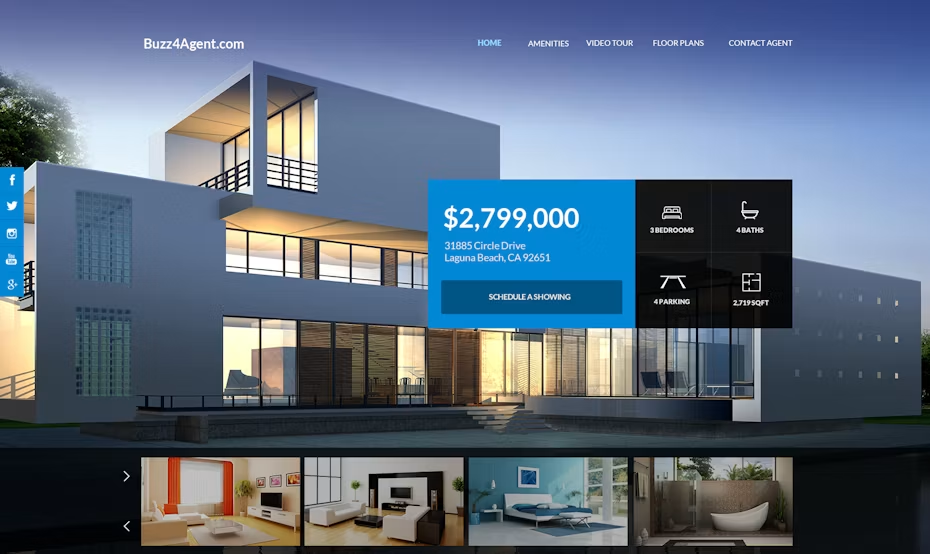
A real estate agency website has one job most other business sites don't: it has to sell two different things to two different audiences at once. Buyers want to find the right property fast. Sellers want proof you'll sell theirs for the best price, with the least hassle. If your site fumbles either job, you're losing enquiries to the agency down the road with a cleaner listings page and a faster appraisal form. Here's what actually matters.
What Buyers, Sellers And Landlords Actually Want
Before picking fonts or colours, it helps to separate the audiences, because they're each looking for something different.
Buyers want to:
- Browse current listings without wading through sold or leased properties
- Filter by suburb, price and property type in a couple of clicks
- See real photos, floor plans and, ideally, a walkthrough video
- Find an agent who actually knows the street their dream home is on
Sellers want to:
- See genuine evidence the agency gets strong results
- Understand how the agency markets a property, not just that it does
- Request an appraisal without ringing during business hours
- Know they'll be working with a specific, named agent, not a call centre
Landlords and tenants want a separate lane entirely. Property management enquiries have nothing to do with a sales appraisal, and lumping them into one generic contact form is one of the fastest ways to lose a rent-roll lead.
A Sunshine Coast real estate agency covering suburbs like Buderim, Mooloolaba and Maroochydore will get all three enquiry types daily. If the website can't tell them apart and route them properly, someone on the front desk is manually untangling emails that should have sorted themselves.
Must-Have Features For A Real Estate Agency Website
| Feature | Why It Matters |
|---|---|
| Live listings feed (realestate.com.au / Domain integration) | Stops sold or leased properties showing as available, which damages trust instantly |
| High-quality photography and virtual tours | Presentation sells property; a shabby gallery undermines the exact skill you're charging for |
| Appraisal request form (separate from general contact) | Often the single most valuable lead type an agency can generate |
| Individual agent profile pages | Buyers and sellers pick the agent as much as the agency |
| Suburb guides / local area pages | Builds local search visibility and positions agents as the local experts |
| Property management enquiry pathway | Keeps landlord and tenant leads distinct from sales enquiries |
| Recent sales / sold listings section | Demonstrates a genuine track record using real results |
| Fast-loading image galleries | Buyers browsing on mobile abandon slow listing pages quickly |
If you're weighing up a rebuild against a patch-up job, our small business website checklist is a useful general starting point before you get into real estate specifics.
Listings That Actually Sync
Nothing erodes trust faster than a buyer clicking through to a property that sold three weeks ago. Your listings feed, whether it's pulled from realestate.com.au, Domain, or your own CRM, needs to update automatically and reliably. If your current site relies on someone manually copying listings across, that's not a website problem you can patch, it's a structural one worth rebuilding around.
Photography And Presentation
An agency's core promise is that it will present a property brilliantly to the market. A website with cropped, dark, or inconsistent photos quietly tells every visitor the agency might do the same to their listing. Support high-resolution galleries, floor plans, and video or virtual tour embeds as first-class content types, not afterthoughts squeezed into a text box.
The Appraisal Form Is Not A Contact Form
Most agency sites bury the appraisal request behind a generic "Contact Us" page. Sellers considering a move want a purpose-built form: property address, rough timeline, reason for selling, preferred contact method. Make it prominent on the homepage and on every suburb page. This single change often lifts seller enquiries more than any redesign of the visual style.
Agent Profiles That Build Confidence
A page listing "Our Team" with tiny thumbnails isn't enough. Each agent deserves their own page: a decent photo, a short bio, years in the local area, specialisations (acreage, units, first home buyers), current listings, and direct contact details. Sellers are choosing a person to trust with one of their biggest assets, and a strong profile page does a lot of that trust-building before the phone even rings.
Local SEO For Real Estate Agencies
Real estate is a hyper-local business, and search behaviour reflects that directly. People don't search "real estate agent," they search "real estate agent Maroochydore" or "property management Mooloolaba." Your website structure needs to match that intent.
Practical steps that make a real difference:
- Build dedicated suburb pages, not just a single "areas we cover" list
- Target "real estate agent [suburb]" and "property management [suburb]" as separate landing pages, since they attract different searchers
- Keep your Google Business Profile complete, categorised correctly, and updated with current listings or sold results
- Actively collect and display reviews, since choosing an agent is a high-trust decision buyers and sellers research carefully
- Publish suburb guides and market update posts regularly, covering things like local amenities, school catchments, and general market conditions
This kind of local content also does double duty for organic visibility. If you haven't yet mapped out how your site's structure supports search, our guide on why your business needs a professional website covers the fundamentals worth getting right first.
Trust Signals That Matter In Real Estate
Because property transactions involve large amounts of money and long timelines, trust signals carry more weight here than in most industries.
- Licensed agent details displayed clearly (name, licence number where relevant)
- Years operating specifically in the local area, not just years in business generally
- A genuine, current sold listings section (never fabricated figures)
- Reviews from actual clients, ideally tied to specific sales or rentals
- Professional photography standards applied consistently across every listing and profile
A shabby, dated website undermines an agency's core pitch just as much as poor signage would. If your current site is starting to feel like a liability rather than an asset, it's worth reading the signs before committing to a rebuild.
Common Mistakes Agencies Make Online
- Listings feed not syncing properly, so sold or leased properties still appear as available weeks later
- Poor quality photography, which undercuts an agency whose entire value proposition is marketing property well
- No clear appraisal pathway for sellers, forcing them through a generic enquiry form
- Treating all agents as interchangeable, with no individual profile pages or specialisations listed
- Ignoring property management as a distinct enquiry type, mixing landlord leads in with sales enquiries
- Slow-loading, image-heavy listing pages that frustrate buyers browsing on mobile data
Any one of these is fixable. Several of them together usually mean the site needs a proper rebuild rather than small tweaks. If you're at that decision point, our piece on how to choose a web design agency walks through what to look for in a partner who understands the real estate side of things, not just generic web design.
Key Takeaways
- Buyers, sellers and landlords each want something different from your site, so design for all three separately
- A reliably synced listings feed matters more than almost any visual design choice
- The appraisal request form deserves its own prominent, purpose-built page
- Individual agent profiles build the trust that generic team pages can't
- Suburb-specific pages and local content are the backbone of real estate SEO
- Property management enquiries need a separate pathway from sales
Frequently Asked Questions
How often should our listings feed update?
Ideally in near real time, synced directly with your CRM or the portals you list on. If updates rely on manual copying, sold or leased properties will keep appearing as available, which damages trust with buyers browsing your site.
Do we really need individual agent pages, or is a team page enough?
Individual pages perform far better. Sellers in particular are choosing an agent, not just an agency, so a proper bio, photo, specialisation area and current listings help them decide who to call.
What should an appraisal request form actually ask for?
Keep it focused: property address, rough timeframe for selling, reason for the move, and preferred contact method. Too many fields discourage sellers from finishing it, but too few make it hard for your team to follow up meaningfully.
Should property management have its own section of the site?
Yes. Landlord and tenant enquiries are a different business line from sales, with different questions and different urgency. Mixing them into one general contact form means enquiries often get missed or misrouted.
How important are suburb pages for local SEO?
Very. Searches like "real estate agent Buderim" or "property management Mooloolaba" are common, and a dedicated page for each suburb you service gives Google clear, specific content to match those searches with.
Can we use stock photos if we don't have great listing photography yet?
Avoid it. Buyers can spot generic stock imagery quickly, and it undermines the exact skill, presenting property well, that an agency is meant to demonstrate. Investing in professional photography for listings is close to non-negotiable.
How do we show a genuine track record without fabricating numbers?
Feature real sold listings with actual addresses and outcomes where you have permission to share them, alongside genuine client reviews. Avoid vague claims or invented statistics, since specific, real examples are far more convincing anyway.
What's the biggest mistake agencies make when redesigning their site?
Focusing purely on visual style while leaving the listings feed, appraisal form, and agent pages as an afterthought. The look matters, but the functional plumbing behind buyer and seller journeys is what actually generates enquiries.
Ready To Fix Your Agency's Website?
If your listings feed is unreliable, your appraisal form is buried, or your agents don't have proper profile pages, those are fixable problems with a clear payoff, more enquiries from buyers, sellers and landlords who already trust you enough to visit your site. We work with agencies to sort out exactly this kind of structural issue, not just the visual polish. If you'd like to talk through what a rebuild or refresh would look like for your agency, have a chat with Pixel and Pine.